When choosing a medical telepresence platform for complex clinical environments, three factors should be considered. These are security and regulatory compliance, real-world performance, and proven use cases.
The technology landscape may appear broad, but few solutions have been purpose-built for clinical practice. Even fewer can bring multiple live video sources and medical devices into the same real-time session. Many available tools remain adaptations of general-purpose videoconferencing platforms. These tools were not designed to meet the specific demands of healthcare professionals.
The shortage of medical specialists and the growing complexity of clinical procedures are increasing the need for remote collaboration. In addition, healthcare organizations must connect geographically dispersed teams. In that context, choosing the right platform makes all the difference.
Security and compliance in a remote clinical collaboration platform
When assessing a remote clinical collaboration platform, healthcare organizations should consider how the provider manages information security. They should also check whether it holds certifications that support its processes and controls. Relevant references include Spain’s National Security Scheme (ENS) and the international ISO/IEC 27001 standard.
Beyond regulatory compliance, two technical aspects make a real difference in healthcare environments.
The first is the deployment model. A platform offering both cloud-based and on-premise deployment can adapt to each organization’s privacy and data control requirements.
The second is communication security: encrypting data in transit helps protect clinical information during a session from unauthorized access or interception.
In healthcare environments, information security should be built into the platform from the outset rather than added later as another feature.
Zerintia HealthTech holds both ENS and ISO/IEC 27001 certifications, issued by AENOR. In addition, 4RemoteHealth supports both cloud and on-premise deployment. It also encrypts clinical communications in transit.
Performance and connectivity under real clinical conditions
A moving ambulance, an operating room with demanding lighting, and an intensive care unit with limited connectivity present very different challenges. These conditions are not comparable to those found in a conventional meeting room. Therefore, a platform not specifically designed for clinical use may not perform as required.
A medical telepresence platform must maintain stable communication even under limited bandwidth. 4RemoteHealth includes a dedicated low-bandwidth mode. Clinicians can adjust resolution and frame rate in real time without interrupting the clinical session. This is particularly important in prehospital settings or areas with limited network coverage.
Latency is another critical factor. In remote clinical collaboration, any noticeable delay can hinder communication and decision-making. 4RemoteHealth is designed to deliver ultra-low latency and near-immediate interaction. As a result, remote specialists can participate in the clinical session in real time.
Image quality and clinical integration
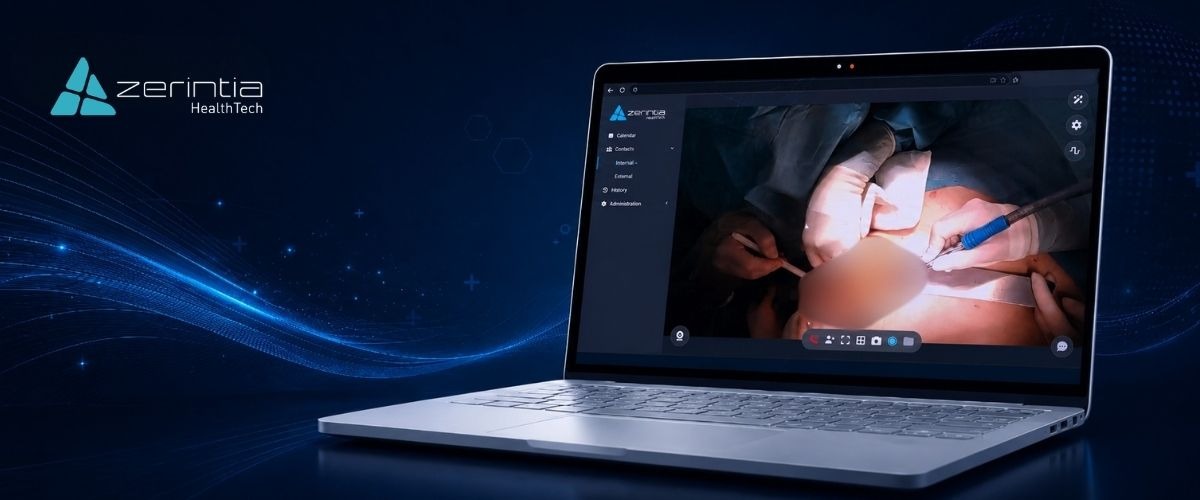
Beyond connectivity, image quality under adverse conditions is equally important. The platform should include tools designed specifically for clinical use. These include exposure control to prevent overexposed images under surgical lights, live image annotation, and other augmented reality tools that allow remote specialists to actively guide the clinician working alongside the patient.
Advanced clinical collaboration goes beyond transmitting video. A platform designed for this environment should bring multiple clinical video sources and medical devices into the same session. It should also allow authorized professionals to capture, share, and securely retain selected evidence for later review.
Hardware independence is another key consideration. A flexible solution should work with different equipment and devices — from tablets and laptops to clinical cameras and smart glasses — without requiring the healthcare organization to replace its existing infrastructure.
Explore 4RemoteHealth’s features.
Real-world use cases before choosing a remote clinical collaboration platform
A demonstration performed under controlled conditions can provide a general overview of a platform. However, it does not always show how the technology will perform in day-to-day clinical practice.
Before deciding, healthcare organizations should request references from projects carried out in similar settings. Examples include operating rooms, ambulances, intensive care units, and medical education programs. Concrete figures and project context help organizations assess the maturity and reliability of the solution.
4RemoteHealth is used in complex, real-world clinical settings.
In Romania, it is part of a project developed with Deltamed to digitize more than 120 ambulances within the national emergency system. Meanwhile, in El Salvador, the platform has been deployed in the operating rooms of Hospital Nacional Rosales, the country’s main public hospital.
In Spain, Zerintia HealthTech’s medical telepresence platform has been integrated into a range of clinical settings and projects. Among them, 4RemoteHealth was used in a surgical telementoring session during a robotic procedure. More than 60 students at UVic-UCC followed the session in real time.
These projects make it possible to assess the platform beyond a demonstration and verify how it performs in real and complex clinical situations.
Request a demo and discover whether 4RemoteHealth is the right fit for your organization.
